



Many who read the Bible can be like the Greek mythological figure, Narcissus. This handsome hunter came across his reflection in a pond and stared endlessly at it. Yet he had no comprehension of what he was looking at. He got lost in looking at himself. We can end up doing the same thing: our eyes pass along the words of God but our minds never engage long enough to understand them.
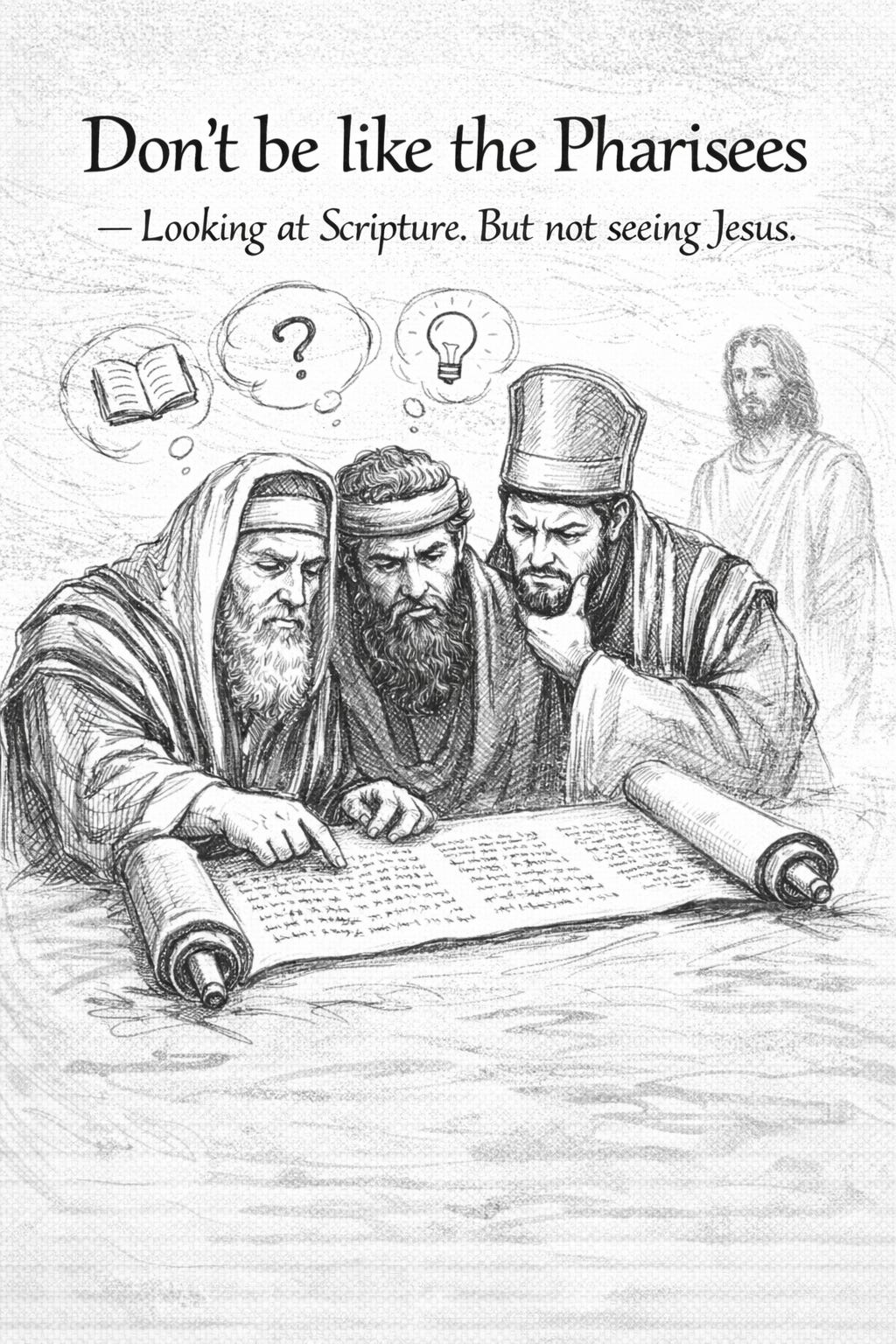
In our real world history, the Pharisees did this, and they missed Jesus entirely! In fact they were actually considered by worldly standards, to be the ones who are diligent in studying Scripture. (See John 5:39,40)
How can we overcome this? How do we not fall into this rut?
A short reflection I posted on Substack Notes captured many people’s attention to this idea. It said:

Pastor J. Gresham Machen said this about the process of thinking:
When any new fact enters the human mind it must proceed to make itself at home; it must proceed to introduce itself to the previous denizens of the house. That process of introduction of new facts is called thinking. And, contrary to what seems to be quite generally supposed, thinking cannot be avoided by the Christian man. - J. Gresham Machen
Wow! “previous denizens”! Who uses that word?
“Previous denizens” are the resident thoughts living in your mind. They are the assumptions, ideas, thoughts or opinions, that have inhabited your mind for years.
When new facts arrive they need to be introduced to these residents and find their place in the “home” of your mind.
That process- as Machen says- is thinking.
Reading the Bible can introduce new facts. However in doing that, we can be dull and unperceptive when we simply read the Bible.
Many people think that in order to solve the church’s problem of biblical illiteracy is to dump the information into
books
seminars
classes
sermons
studies.
And sure, they have their place.
It’s not just that we read too little, That is true.
But it’s that we read too fast and then move on.
What is behind most material that instructs well, is the intentional, sharp thinking and perceptive, discerning minds that put it together.
But let’s admit something: not everybody has that instant insight at first read. Or even the second reading.
And that’s ok!
Yet that is the reason I’m urging for a slow down in Bible intake.
The mental engagement in reading Scripture is to coincide with prayerful listening to the still small voice of the Holy Spirit.
He is the one who instructs and reforms your thinking.
He is the one that opens the eyes of your heart in understanding, application, worship and awe.
Scripture Says
2 Timothy 2:7 says: “Reflect on what I am saying, for the Lord will give you insight into all this.”
This advice from the apostle Paul to Timothy hits the point.
We think.
Yet the Lord gives the insight.
He wants us to take time and reflect on his Word.
Perhaps Apostle Paul was remembering the words of Proverbs 2 where the father urges his son to
receive his word, (see v.1)
treasure them up, (see v. 1)
listen to wisdom (see v.2)
and apply to understand. (see v.2)
This all takes time.
Time to reflect.
Time to think.
Time to pray.
Time to hear God.
Some Suggestions
What has worked for me is to expose myself to sharp thinkers. It help my dull perception. It even helps my dry moment in verses I’ve read a thousand times. It doesn’t (and never should) replace God’s Word. Rather it helps me to reflect better on God’s Word.
This is where the good sermons, studies, seminars and conferences come into play. It is why I read and listen to sermons so much. This might work for you too.
In good studies, it’s the insights they pull together to ask good questions that guide my reflections. This teaches me to ask good questions while reading the text.
In good sermons, it’s perhaps a statement that catches my attention that I need write down and chew on it a bit. That’s usually the result of the Holy Spirit’s stirring in my heart through the Preaching of the Word.
In books, as Pastor John Piper identified, life changing insights come from moments when a paragraph or sentence. stand out from the pages. It’s rarely the entire book itself. In fact it is those starred or underlined sentences that I reflect on by bringing them back to God’s word to see if it stands up as a good insight or conclusion that is built from the truth of Scripture.
In commentaries- depending on their technicality- it’s reading and then thoughtfully considering- the conversations and arguments of scholars who have the academic rigor to think through
language
cultural
and historical gaps
before I apply it to real life.
Start Here
The goal of reading Scripture is to relate with our Savior. To get that mental attitude comfortable in the rooms and categories of your mind and heart may take some help outside of you.
Overall the goal is finding the teacher, writer or preacher whose thoughts grab your attention, slows you down and helps you to think about Scripture in the similar ways you think, yet helps you expand your thought process.
Find someone in your church who knows the Bible well and can commit to meeting with you periodically. It may not be the first person you ask. But keep looking. Human conversation is key to being mentored in this.
Finally, purchase the following:
A whole Bible commentary. I recommend Matthew Henry’s and the New Bible Commentary. Between the two of them you’ll get a good combination of godly, intelligent and devotional meditations and understanding.
Add to your quiet time tool box, D.A. Carson’s 2 Volume devotional, For the Love of God. In it you will find scholarly and warm summary of Bible passages you read in a Scriptural Reading plan that will help form your world view to be more like Christ.
If reading the Bible is hard for you, take it slow, steady and prayerfully think. The Lord is not waiting for you to check a box or distill a theological treaties. He desires to meet with you and speak to you. Remember it’s relational.
God is speaking to you through His written word and helps you through the Holy Spirit who lives in you.
Accept his daily invite to hear from him one verse and chapter at a time. (click on link for a Bible challenge.)

See also:

Such a great Post! I am so impatient and I know I struggle with just sitting with scripture and letting myself take it in and gather the context, slowly and methodically! I loved this -- so timely!